
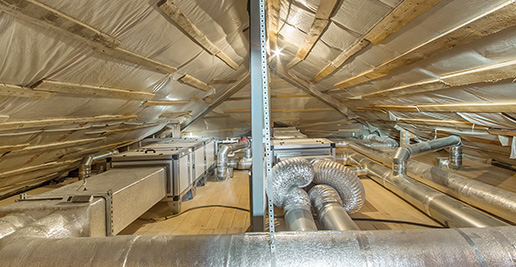
Rats or raccoons were in your attic. Here is what proper restoration actually involves - and why most homeowners skip a critical step
Most homeowners who discover rodents or wildlife in their attic focus on the animal. Get it out, seal the entry point, done. The problem is that by the time most Bay Area homeowners discover they have had a roof rat or raccoon in their attic, the animal has been there long enough to cause damage that getting it out does not fix.
Rats urinate constantly as they travel. Raccoons establish latrine sites - fixed locations where they defecate repeatedly. Both leave pheromone trails that actively attract new animals to the same entry points even after sealing. Contaminated insulation loses R-value, harbors pathogens, and becomes a health hazard when disturbed by HVAC activity. And none of this resolves itself over time - it gets worse.
Attic restoration is what happens after the animal is gone. Here is the complete process, why the sequence matters, and what gets missed when it is done incompletely.
Why Bay Area attics face this problem more than most
Contra Costa County and the wider East Bay have several conditions that make attic contamination more common here than in most US regions:
- Mild winters mean roof rats are active year-round rather than declining in winter, giving them more time to contaminate attic spaces before homeowners notice
- Mature tree canopy in Walnut Creek, Lafayette, Danville, Alamo, and Fremont creates consistent roof rat access highways that expose attics to ongoing pressure even after exclusion work
- Open space adjacency in cities like Danville, San Ramon, and Alamo brings raccoons and squirrels into attic spaces from adjacent wildland corridors repeatedly
- Older housing stock throughout Concord, Pleasant Hill, and Hayward has original insulation that was not designed to last decades and is already compromised before rodents add contamination
How to know if your attic needs restoration - not just rodent removal
Rodent removal and attic restoration are two different services that are often confused. Removal gets the animal out. Restoration addresses what was left behind. You need restoration if:
- You hear or smell evidence that rodents have been present for more than a few weeks - established infestations leave insulation heavily saturated with urine
- An inspection reveals widespread droppings rather than isolated activity - a few droppings near a vent is different from a trail running the length of the attic
- A raccoon has been present long enough to establish a latrine site - look for a concentrated pile of large droppings in one location, often in a corner
- Your insulation appears flattened, displaced, or matted - rodents tunnel through and nest in insulation, destroying its thermal performance in the process
- You notice musty or ammonia-like odors from HVAC registers - contaminated attic air entering the living space through the HVAC system is a health concern that needs to be addressed
The correct sequence - and why it matters
The most common mistake in attic restoration is getting the steps out of order. Here is the correct sequence and what goes wrong when steps are skipped:
Step 1 - Inspection and assessment: Before any removal or cleaning work begins, the full attic space needs to be mapped: entry points, extent of contamination, insulation condition, and any structural damage. This step tells you the actual scope of work. Skipping it means you may remove contaminated insulation in one area while leaving a heavily contaminated section untouched.
Step 2 - Rodent or wildlife removal and entry point sealing: The animal and all entry points must be addressed before any restoration work begins. Installing new insulation into an unsealed attic is a waste - rodents will recontaminate it within a season. This is the step that most partial restoration jobs miss: new insulation is installed, but the entry points that allowed access were never properly identified and sealed. The result is a freshly insulated attic that rats access again within months.
Step 3 - Contaminated insulation removal: All insulation that has been saturated with urine, feces, or nesting material is removed using industrial vacuum equipment and appropriate respiratory protection. This is not a DIY project - dried rodent urine and feces release airborne particles containing Hantavirus, Leptospira, and in the case of raccoon feces, Baylisascaris roundworm eggs. Professional-grade equipment and PPE are required.
Step 4 - Sanitation and deodorization: After insulation removal, all exposed surfaces in the attic - rafters, decking, ductwork - are treated with an enzyme-based sanitizer that breaks down organic material and eliminates odors. This step is critical for two reasons: it addresses the health hazard from residual contamination, and it neutralizes pheromone trails. Rodents and wildlife use scent trails to return to previous entry points - leaving those trails active in a sealed, freshly insulated attic is an invitation for re-entry the next time a gap develops.
Step 5 - New insulation installation: New insulation is the final step, installed only after the attic is clean, sanitized, and fully sealed. The type of insulation chosen matters - blown-in cellulose or fiberglass performs well in Bay Area attics and restores R-value lost from years of contaminated, compressed original insulation. Properly restored attics in the East Bay climate typically see meaningful reductions in heating and cooling costs as a secondary benefit.
What happens when restoration is done incompletely
The consequences of skipping steps compound over time. Unsealed insulation continues to off-gas ammonia and pathogen-containing particles into the living space. Pheromone trails that were not neutralized attract new rodents to the same entry points. Insulation installed before the entry points were sealed is recontaminated within one to two seasons. In severe cases, particularly after extended raccoon occupation, Baylisascaris roundworm eggs remain viable in the soil or wood surfaces of the attic for years and pose an ongoing health risk to anyone accessing the space.
A complete restoration job done in the correct order addresses all of this in a single project. It costs more than partial work upfront and significantly less than recontamination and repeat treatments over three to five years.
Mighty Men provides complete attic and crawlspace restoration services throughout Walnut Creek, Danville, Lafayette, Alamo, Fremont, Concord, Pleasant Hill, San Ramon, and the wider East Bay and Contra Costa County corridor. Call (925) 204-2455 to schedule an inspection.
Frequently asked questions
How do I know if I need full insulation replacement or just cleaning?
If rodents have been present for more than a few weeks, full replacement is almost always the right call. Insulation saturated with urine cannot be cleaned - the contamination is absorbed throughout the material rather than sitting on the surface. Spot-cleaning contaminated sections without replacing the insulation leaves the health hazard in place and the R-value degraded. An inspection will tell you the actual extent of contamination and what is required for your specific attic.
Is raccoon feces more dangerous than rat droppings?
Both present health hazards, but raccoon feces carries a specific additional risk: Baylisascaris procyonis, a roundworm whose eggs can cause severe neurological illness in humans, particularly children, and pets. The eggs are microscopic and become airborne when dried feces are disturbed. This is why raccoon-contaminated attic spaces require professional cleanup with respiratory protection - and why the sanitization step is not optional after a raccoon has established a latrine site.
Does homeowners insurance cover attic restoration?
It depends on the policy and the cause. Most standard policies exclude gradual damage from pests, but if wildlife caused sudden structural damage - a raccoon tearing through a roof vent, for example - that structural damage may be covered. Some California policies also cover damage to specific home systems like ductwork caused by rodents. It is worth filing a claim and having an adjuster assess, particularly for extensive restoration projects. We can provide detailed documentation of findings and work completed to support an insurance claim.
How long does attic restoration take?
A typical single-family home attic restoration - contamination removal, sanitation, and insulation installation - is usually completed in one to two days depending on attic size and extent of contamination. Entry point sealing may require a separate visit depending on the scope of work identified during the inspection. We will give you a clear timeline and scope at the time of inspection.
Can rats come back after the attic is restored?
If the restoration is done correctly - all entry points identified and sealed before new insulation is installed, and pheromone trails neutralized during the sanitation step - the structural vulnerability is eliminated. New entry can only occur if new gaps develop over time (common in older Bay Area homes with wood that continues to settle) or if tree canopy is allowed to re-contact the roofline. Properties in Walnut Creek, Danville, and Alamo adjacent to open space benefit from a follow-up exterior inspection every three to four years to catch any new vulnerabilities before they are exploited.