
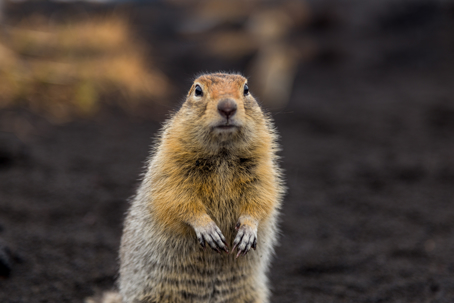
If you've stepped outside to find fresh mounds of dirt scattered across your lawn, or watched a plant that looked fine yesterday suddenly wilt and collapse, gophers are the likely culprit. Pocket gophers are one of the most destructive and frustrating yard pests in the East Bay - and unlike some pests that slow down in summer, gopher activity in Contra Costa County and the Tri-Valley stays intense through July and August, driven by the same hot, dry conditions that send us indoors.
Here's what you need to know about East Bay gophers, what the damage looks like, and what actually works to stop them.
Why Gophers are Especially Bad in the East Bay
The Bay Area is home to Botta's pocket gopher (Thomomys bottae), one of the most adaptable and prolific burrowing rodents in California. Contra Costa County's combination of deep loam soils, irrigated residential landscapes, and proximity to open space creates ideal gopher habitat.
Two things make summer the worst time of year in the East Bay specifically:
- Dry hillsides push gophers into irrigated yards. As the hills and open space around Walnut Creek, Danville, and Lafayette dry out through June and July, gophers migrate toward the moisture. Your irrigated lawn and garden become a rare oasis in a dry landscape - and every gopher within range knows it.
- Breeding season ramps up spring activity into summer. Gophers breed heavily from February through May, producing litters of 5-6 pups. By July, that spring population is now actively establishing new territories - which means new tunnel systems and new mounds appearing across your yard.
Properties in hillside neighborhoods bordering open space - Northgate, Rudgear Estates, the Shell Ridge area, and similar foothills communities - face the highest pressure. But gophers are equally common in flatter residential areas with established gardens and vegetable beds.
Signs You Have Gophers - Not Moles or Voles
Gophers are often confused with moles and voles, but the signs are distinct:
Crescent or fan-shaped mounds: Gopher mounds are asymmetrical - they're pushed to one side of the tunnel opening and have a plugged hole in the center. Mole mounds are more symmetrical (like a small volcano) and have no visible plug. If you're seeing crescent-shaped dirt mounds with a depression in the center, you have gophers.
No visible hole: Gophers seal their tunnel entrances from below, so you won't see an open hole in the mound. This is one reason they're tricky to deal with - you can't see where they are.
Wilting or collapsing plants: Gophers feed almost entirely on roots and underground plant material. A tomato plant, rosebush, or ornamental grass that suddenly wilts and pulls out of the ground with no roots attached has almost certainly been eaten by a gopher.
Gnawed irrigation lines: Drip irrigation lines are a common casualty. Gophers follow drip tubing through the soil because it leads them to water and root systems. Finding bitten-through irrigation lines below the surface is a classic East Bay gopher indicator.
Surface trails (runways): Unlike moles, gophers don't create raised surface tunnels. If you're seeing raised ridges across your lawn, that's moles, not gophers. Gopher tunnels run 6-18 inches underground.
Why DIY Gopher Control Usually Fails
Walk into any hardware store and you'll find gopher repellents, sonic stakes, castor oil granules, and poison bait. Most East Bay homeowners have tried at least one of these. Here's why they fall short:
- Repellents and sonic stakes: No peer-reviewed evidence supports these as reliable gopher control. Gophers are highly adaptable and quickly learn to ignore sonic deterrents. They may shift temporarily, but return once the novelty wears off.
- Castor oil granules: Can deter gophers from a specific area temporarily but doesn't eliminate them. Nearby populations simply move to untreated areas of your yard and continue tunneling.
- Poison bait: Most poison bait products used for gopher control - including strychnine and zinc phosphide - are largely banned or severely restricted in California due to the risk of secondary poisoning to wildlife, raptors, and pets. Even where certain products remain technically available, they require a licensed pesticide applicator for residential use and carry serious risks when improperly placed. This is not a practical DIY solution in California.
- Box traps set at the surface: Gophers almost never emerge above ground voluntarily. Surface traps catch very little.
The most effective non-toxic method is mechanical trapping inside the tunnel system. This requires locating the main tunnel (not just the lateral that created the mound), opening it correctly, setting the right trap type, and covering the opening to block light. Done correctly, it's highly effective. Done incorrectly, gophers simply avoid the trap and push soil into it.
CO2 Treatment: A Green Solution that Works on More than Gophers
In addition to mechanical trapping, Mighty Men offers carbon dioxide (CO2) treatment - an environmentally friendly method that introduces pressurized CO2 directly into the tunnel system. CO2 is a naturally occurring gas, leaves no chemical residue in the soil, and poses no secondary poisoning risk to wildlife, pets, or beneficial insects.
CO2 treatment is particularly effective because it reaches the full extent of the tunnel network rather than just a single trap location. It's also one of the few methods that works reliably across multiple burrowing pest species:
- Pocket gophers
- Moles
- Voles
- Ground squirrels
If you're dealing with mixed burrowing pest activity - a common situation on properties bordering Walnut Creek's open space areas where gophers, ground squirrels, and moles can be present simultaneously - CO2 treatment addresses all of them in a single service visit without the need for separate treatment programs. For homeowners who grow food, keep chickens, or have concerns about chemical use around children and pets, it's often the preferred approach.
What Professional Gopher Control Looks Like
At Mighty Men, gopher removal starts with a proper tunnel survey - locating the main tunnel using a soil probe, not guessing based on mound location. The mound is almost never directly above the main tunnel; it's usually offset 12-24 inches to one side.
For mechanical trapping, once the main tunnel is located we open it at two points and set traps in both directions. The opening is covered to block light, which is critical for keeping the gopher from detecting the disturbance and avoiding the set. We return within 2-3 days to check, remove caught gophers, and reset as needed until activity is confirmed eliminated.
For CO2 treatment, we probe the tunnel system to map its extent, then introduce CO2 under pressure through the main tunnel. The treatment is completed in a single visit with no waiting period before the yard is safe to use again.
For properties with recurring gopher pressure - particularly those bordering open space or with large irrigated gardens - we offer ongoing monitoring programs that catch new activity before it becomes a full-scale yard destruction event.
We serve homeowners throughout Walnut Creek, Danville, Lafayette, Alamo, Moraga, and the wider Contra Costa County corridor.
Frequently Asked Questions
What's the difference between a gopher mound and a mole mound?
Gopher mounds are crescent or fan-shaped, pushed asymmetrically to one side, with a plugged depression in the center. Mole mounds are rounder and more symmetrical, with no visible plug - they look like a small volcano. Moles also create raised ridges on the lawn surface; gophers don't. If you're seeing crescent-shaped mounds and your plants are dying from root damage, you have gophers.
Are gopher repellent plants actually effective?
Plants like gopher spurge (Euphorbia lathyris) are sometimes recommended as deterrents. They may reduce gopher pressure in a very localized area but don't protect adjacent plants or larger garden beds. For established infestations, repellent plants are not a substitute for actual removal.
How many gophers are usually in a yard?
Gophers are largely solitary - each tunnel system typically belongs to one individual. However, a single gopher can create 200 or more mounds per year and maintain a tunnel network covering several hundred square feet. Properties bordering open space often see new gophers moving in shortly after an existing one is removed, which is why perimeter monitoring matters in high-pressure areas.
Can gophers damage my irrigation system?
Yes, and this is one of the more costly aspects of gopher damage in the East Bay. Gophers follow drip tubing through the soil and chew through it - sometimes severing dozens of emitters in a single tunnel run. If you're finding irrigation failures you can't trace to the surface, pull back the area carefully and look for bitten tubing below grade.
Is CO2 treatment safe for my garden, pets, and children?
Yes. CO2 is a naturally occurring gas that leaves no chemical residue in the soil. There is no waiting period after treatment before the yard is safe for children, pets, or gardening activity. It is one of the reasons we recommend it for vegetable gardens and properties where chemical exposure is a concern.
How do I schedule a gopher inspection?
Call us at (925) 204-2455 to schedule an inspection. We'll assess the extent of tunnel activity, identify the species involved, and recommend the most appropriate treatment - mechanical trapping, CO2, or a combination of both depending on your property and situation.
Seeing fresh mounds in your yard? Call Mighty Men at (925) 204-2455 to schedule an inspection. We serve Walnut Creek, Danville, Lafayette, and the wider East Bay.