
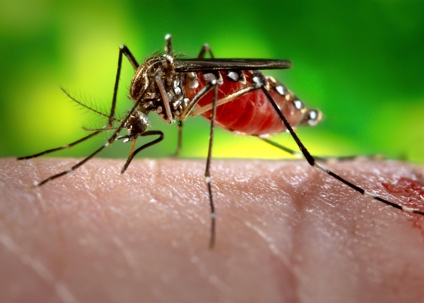
Most people think of mosquitoes as a nuisance pest - something that ruins an evening on the patio but not a serious concern. In Contra Costa County, that assumption is worth revisiting. The Contra Costa Mosquito and Vector Control District has confirmed West Nile virus activity in Walnut Creek and the wider county every summer for more than two decades, including in mosquito traps, dead birds, and horse populations. The District currently surveys more than 10,000 acres of mosquito habitat across the county and is actively running suppression programs for invasive Aedes species - a level of investment that reflects how seriously local agencies take mosquito pressure here.
If you are seeing mosquitoes in your yard this summer, here is what is driving them, what you can do yourself, and why a professionally installed In2Care station is one of the best long-term investments you can make for your yard.
Why the East Bay Has a Real Mosquito Problem
Contra Costa County's ecological diversity creates mosquito habitat that many Bay Area residents do not realize is right in their backyard. The county spans from tidal marshlands along the shoreline to irrigated residential neighborhoods in the inland valleys - and each environment supports different mosquito species with different breeding behaviors.
In Walnut Creek specifically, three factors drive residential mosquito pressure:
- Creek corridors: The San Ramon Creek and Walnut Creek channels running through the heart of the city create permanent slow-water habitat. Creek margins with pooling or low flow are productive breeding sites throughout summer.
- Residential irrigation: Overwatered lawns, drip emitters that pool at the surface, and garden beds that stay consistently damp create micro-breeding sites homeowners rarely think of as mosquito habitat. A container as small as a bottle cap with standing water can produce dozens of mosquitoes in a week.
- Ornamental water features: Birdbaths, decorative ponds, and fountains that are not properly circulated or treated are among the most productive mosquito breeding sites in residential yards. A birdbath refilled but not scrubbed weekly is a reliable mosquito nursery all summer.
The Two Mosquito Species You are Most Likely Dealing With
Culex mosquitoes (the West Nile vector): Culex pipiens and Culex tarsalis are the primary West Nile virus vectors in Contra Costa County - the species the District traps and tests each summer. They breed in stagnant water with organic matter, bite primarily at dawn and dusk, and can travel up to a mile from their breeding site. Eliminating sources in your own yard matters, but nearby standing water can still sustain pressure from off-property.
Aedes mosquitoes (the daytime biters): Aedes aegypti and Aedes albopictus - commonly called tiger mosquitoes - are an invasive species now established in parts of Contra Costa County. Unlike Culex, these species bite aggressively during the day, breed in very small amounts of water, and are significantly harder to control at the property level because of how dispersed and minimal their breeding sites are. They are also the species that carry dengue, Zika, and chikungunya - diseases that, while currently rare in California, are worth taking seriously given that Aedes populations are actively expanding in the Bay Area.
What You Can Do in Your Own Yard
Source reduction - eliminating standing water - is the single most effective thing a homeowner can do and costs nothing. A thorough weekly walkthrough of your property during summer should check:
- Empty and scrub birdbaths every 3-4 days to remove egg rafts
- Clean gutters of leaves and debris that hold water after irrigation or morning dew
- Turn over or remove any containers that collect water: buckets, pot saucers, tarps, unused plant trays
- Confirm downspout splash blocks and drainage swales drain fully and do not pool
- Treat ornamental ponds or water features with Bacillus thuringiensis israelensis (Bti) dunks - a naturally occurring bacterium that kills mosquito larvae without harming fish, birds, or beneficial insects
- Fix drip irrigation that pools at the surface rather than draining
Personal protection during peak hours - dawn and dusk for Culex, all day for Aedes - should include EPA-registered repellents. Long sleeves and pants in light colors during outdoor activity at dusk significantly reduce bite exposure.
In2Care Stations: a Smarter, Greener Approach for Your Yard
A barrier spray kills adult mosquitoes that are already present. An In2Care station goes further - it uses mosquito behavior itself to spread control to breeding sites you will never find on your own.
Here is how it works: the In2Care station is a small, dark water-filled container placed in a shaded area of your yard. It uses an organic odor lure to attract egg-laying female Aedes mosquitoes - the same species responsible for daytime biting. When a mosquito enters the station to lay eggs, she lands on a specially treated gauze and picks up two bioactive agents: a slow-acting biological fungus (Beauveria bassiana) that kills her within a few days, and a larvicide (pyriproxyfen) that sticks to her legs and body.
The key is what happens next. Aedes mosquitoes are skip-ovipositors - they naturally divide their eggs across multiple small water sources rather than laying all at once. As the contaminated mosquito leaves the station to find additional egg-laying sites, she spreads the larvicide to every water container she visits: a bottle cap in the neighbor's yard, a clogged drain two doors down, a puddle in a tarp you did not know existed. The station does not just kill the mosquitoes that enter it. It turns those mosquitoes into agents that treat surrounding breeding sites you cannot see or access.
Why this matters for the East Bay specifically: Aedes mosquitoes are the hardest species to control with conventional spraying because their breeding sites are so small and dispersed. A single contaminated female from your In2Care station can effectively treat water containers up to 1.3 gallons in volume at surrounding properties. The dissemination effect means the station's reach extends well beyond your own yard - something no spray program can replicate.
In2Care stations are EPA-registered, use no broad-spectrum synthetic pesticides, and are safe around people, pets, and pollinators when installed as directed. They work continuously between service visits and require a maintenance refresh approximately every four to six weeks - which Mighty Men handles as part of the service.
For homeowners who are concerned about chemical exposure in their yard, want something working around the clock rather than just after a spray visit, or are dealing with daytime Aedes biting that barrier sprays do not fully address, In2Care stations are the most effective upgrade available.
When Barrier Spray Treatment is the Right Call
Barrier spray and In2Care work best together, not as alternatives. Barrier spray targets adult mosquitoes resting in foliage and ground cover - it reduces the existing adult population quickly and provides 3-4 weeks of residual protection. In2Care works on the larval pipeline, disrupting new populations from emerging over the following weeks and months.
For properties near creek corridors or with ornamental water that cannot be removed, combining both approaches produces significantly better results than either alone. We will assess your property during an inspection and recommend the right combination based on your yard's specific conditions.
We serve residential and commercial properties throughout Walnut Creek, Concord, Pleasant Hill, Danville, Alamo, and the wider Contra Costa County corridor.
Frequently Asked Questions
Is West Nile virus a real risk in Walnut Creek?
Yes. The Contra Costa Mosquito and Vector Control District has confirmed West Nile virus in Walnut Creek mosquito traps and dead birds in multiple years of monitoring. The vast majority of people bitten by an infected mosquito experience no symptoms, but roughly 1 in 5 develops West Nile fever, and a small percentage develop more serious neurological illness. People over 60 and those with compromised immune systems face higher risk.
What makes In2Care different from a regular mosquito trap or zapper?
Most consumer traps and bug zappers simply capture or kill individual insects near the device. In2Care works differently - it uses the mosquito's own behavior to spread control far beyond the station itself. A contaminated female carries larvicide to every additional water source she visits before dying. This auto-dissemination effect means the station treats cryptic breeding sites across your yard and neighboring properties that a spray program or trap could never reach. It is the only EPA-registered system that turns mosquitoes into vectors of their own population's collapse.
Will citronella candles or bug zappers help?
Citronella candles provide very localized protection in still air - they are essentially ineffective outdoors in any breeze. Bug zappers attract and kill large numbers of harmless insects (moths, beetles) but have negligible impact on mosquito populations, since mosquitoes are attracted primarily to carbon dioxide and body heat rather than UV light. Neither reduces the mosquito population on your property; they only affect the immediate area around the device.
How often does the In2Care station need to be serviced?
In2Care stations require a maintenance refresh every four to six weeks - the gauze bioactives are replenished and the water is changed. Mighty Men includes this as part of the mosquito service program. During dry East Bay summers, the water level may need topping up between visits, which can be done without removing the lid.
Can you treat my yard for a specific outdoor event?
Yes - one-time pre-event barrier treatments are a common request for backyard gatherings, outdoor parties, and summer events. Treatment should be applied 24-48 hours before the event for maximum effectiveness. Call (925) 204-2455 to schedule an inspection and get a quote.
What is the Contra Costa Mosquito District and can they help?
The Contra Costa Mosquito and Vector Control District is a public agency that has managed mosquito populations in the county since 1927. They offer free property inspections and can deploy Mosquitofish in ornamental ponds that cannot be drained.
Their services cover mosquitoes, rats and mice, ground-nesting yellowjackets, ticks, and skunks. For contact treatment of adult mosquitoes and ongoing yard protection, professional pest control is the more appropriate call.
Dealing with mosquitoes in your East Bay yard this summer? Call Mighty Men at (925) 204-2455 to schedule an inspection. We serve Walnut Creek, Concord, Danville, and the wider Contra Costa County corridor.