
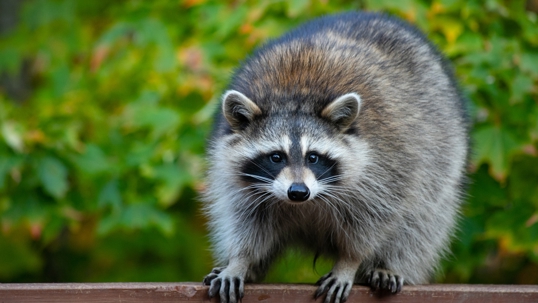
Every fall, the same pattern plays out across Walnut Creek, Lafayette, Danville, and the wider East Bay: homeowners start hearing thumping, scratching, or heavy footsteps above the ceiling. The culprit is almost always a raccoon - usually a pregnant or recently nursing female who has been scouting den sites since September and found an attic that meets her requirements.
Raccoons are not random in their choices. They look for specific conditions, and the East Bay's mature neighborhoods - with older roof vents, ivy-covered fences, and tree branches reaching rooflines - provide them at scale. Understanding what draws raccoons to your property is the first step to keeping them out. Here is what actually works.
Why East Bay properties attract raccoons
Walnut Creek and the surrounding corridor sit at the edge of one of the densest wildlife zones in the Bay Area. The Shell Ridge, Lime Ridge, and Acalanes Ridge open space preserves border residential neighborhoods directly, and the San Ramon and Walnut Creek creek channels serve as movement corridors that funnel raccoons from wildland into suburbs year-round. When temperatures drop in fall, that pressure intensifies as raccoons shift from foraging mode to denning mode.
Five specific conditions make a property attractive to denning raccoons:
- Roof access via tree canopy: A branch within four feet of the roofline is a raccoon ramp. Raccoons are strong climbers and can leap the gap from a branch to a gutter or eave. Mature oaks, sycamores, and fruit trees in East Bay neighborhoods are the primary entry highway.
- Unsecured or aging roof vents: Standard plastic or aluminum roof vents are not raccoon-proof. A determined female can rip through a standard vent cover with her forepaws in under a minute. Vents with deteriorating screens or corroded frames are even easier.
- Accessible food sources: Unsecured trash, pet food left outside, birdfeeders, and fruit dropping from trees all signal to raccoons that a property is worth investigating. Once a raccoon associates your yard with food, she will return and eventually look for a den site nearby.
- Ivy and climbing plants on exterior walls: Dense ivy growing up exterior walls creates a ladder that raccoons - and roof rats - use to reach eave lines and roof edges. It also provides daytime shelter near the structure.
- Low deck or shed foundations: Open gaps under decks, concrete stoops, and sheds provide secondary den sites that raccoons use before or instead of attics, particularly in early fall before they commit to an enclosed structure.
The damage a denning raccoon causes
A raccoon that establishes a den in your attic is not simply an inconvenience. The damage compounds quickly:
Structural damage: Raccoons pull apart insulation for nesting material, gnaw on wood framing and rafters, and tear roof materials to enlarge entry points. They are significantly stronger than roof rats and can cause damage in a short time that takes considerable repair.
Electrical hazard: Raccoons chew through electrical wiring in attics, creating a fire risk. This is less common than with rodents but does occur, particularly with aluminum wiring in older East Bay homes.
Contamination: Raccoons establish latrine sites - fixed locations in the attic where they repeatedly defecate. Raccoon feces can carry Baylisascaris procyonis, a roundworm whose eggs become airborne when droppings dry. This is a genuine health hazard, particularly for children, and it is why raccoon-contaminated insulation cannot simply be cleaned - it requires professional removal and replacement.
Re-entry after removal: Raccoons have strong site fidelity. A female removed from your attic in October will attempt to return to the same site the following spring when she is seeking a den for her next litter. Removal without exclusion work is a temporary fix.
How to raccoon-proof your home before they move in
The most cost-effective approach is prevention before a raccoon has established a den. Here is a practical fall inspection checklist:
- Trim every tree branch to at least six feet from the roofline - do not just trim the obvious ones, check from the roof looking outward for any branch that provides a launching point
- Replace standard roof vent covers with heavy-gauge galvanized steel mesh covers rated for wildlife exclusion - standard aluminum vents are not sufficient
- Check the soffit line for any gaps, loose boards, or deteriorated material, particularly at corners where different roofing materials meet
- Remove ivy and climbing plants from exterior walls, especially near rooflines and eave edges
- Install hardware cloth at least 12 inches deep around the perimeter of decks, sheds, and concrete stoops to close off ground-level den sites
- Secure trash cans with bungee cords or locking lids, and bring pet food and bird feeders inside at night
- Remove fallen fruit from under trees promptly - a yard with consistent food availability becomes a regular raccoon circuit regardless of what exclusion work you do to the structure
What to do if a raccoon is already inside
If you are hearing footsteps above the ceiling, the first and most important rule is: do not seal any entry points until you are certain the animal is no longer inside. Sealing a raccoon in - particularly in spring when a female may have young in the attic - causes the animal to tear through the structure trying to escape. Young raccoons sealed in without their mother will die in the attic, creating an odor problem that requires opening the ceiling.
The correct sequence is inspection first, removal second, exclusion third. A professional inspection locates the entry point, assesses whether young are present, and determines the removal approach. Once the animal and any young are confirmed out, every entry point is sealed with materials raccoons cannot breach. Attic assessment follows to determine whether contamination cleanup and insulation replacement are needed.
We serve homeowners throughout Walnut Creek, Danville, Lafayette, Concord, Pleasant Hill, and the wider East Bay. Call Mighty Men Pest Control (925) 204-2455 to schedule an inspection.
Frequently asked questions
How do I know if I have a raccoon in my attic versus a roof rat?
The sounds are the clearest indicator. Raccoons are heavy - their movement produces thumping, rolling, and what sounds like a person walking. They are most active at dusk and through the night. Roof rats are lighter and faster, producing a scurrying or running sound. Raccoon entry points are also significantly larger - look for torn or bent vent covers, pulled-back soffit panels, or roof material that has been physically pushed aside.
Is it legal to trap and relocate raccoons in California?
California law requires that trapped raccoons be released on the same property where they were caught or euthanized - they cannot legally be relocated to another area. This is one of the reasons DIY trapping often fails to solve the problem: the animal is released back onto the property without the entry point being sealed, and simply re-enters. Professional removal combined with exclusion work is the approach that produces lasting results.
Do raccoons carry diseases I should be worried about?
The primary concern in the Bay Area is Baylisascaris procyonis, a roundworm found in raccoon feces whose eggs can become airborne when droppings dry. Exposure can cause serious neurological illness in humans and pets. Raccoons in California can also carry rabies, though cases are relatively rare compared to the East Coast. This is why raccoon-contaminated attic spaces require professional cleanup rather than DIY cleaning, and why any handling of raccoons should be left to licensed wildlife professionals.
Will raccoons come back after being removed?
If the entry point is sealed and the conditions that attracted them are addressed, most raccoons will not return. However, females have strong site fidelity and will attempt to return to a previous den site the following spring when seeking a location for their next litter. A thorough exclusion job that seals every potential entry point - not just the one she used - is the protection against this.
Can I handle raccoon removal myself?
California wildlife law restricts how and where raccoons can be trapped and released, and improper handling of a raccoon poses genuine injury and disease risk. More practically, DIY attempts frequently result in incomplete exclusion that leaves the animal returning through an undetected second entry point. A professional inspection, removal, and exclusion job costs more than a hardware store trap but produces a permanent result rather than a cycle of re-entry.